 Salesforce Dev Help
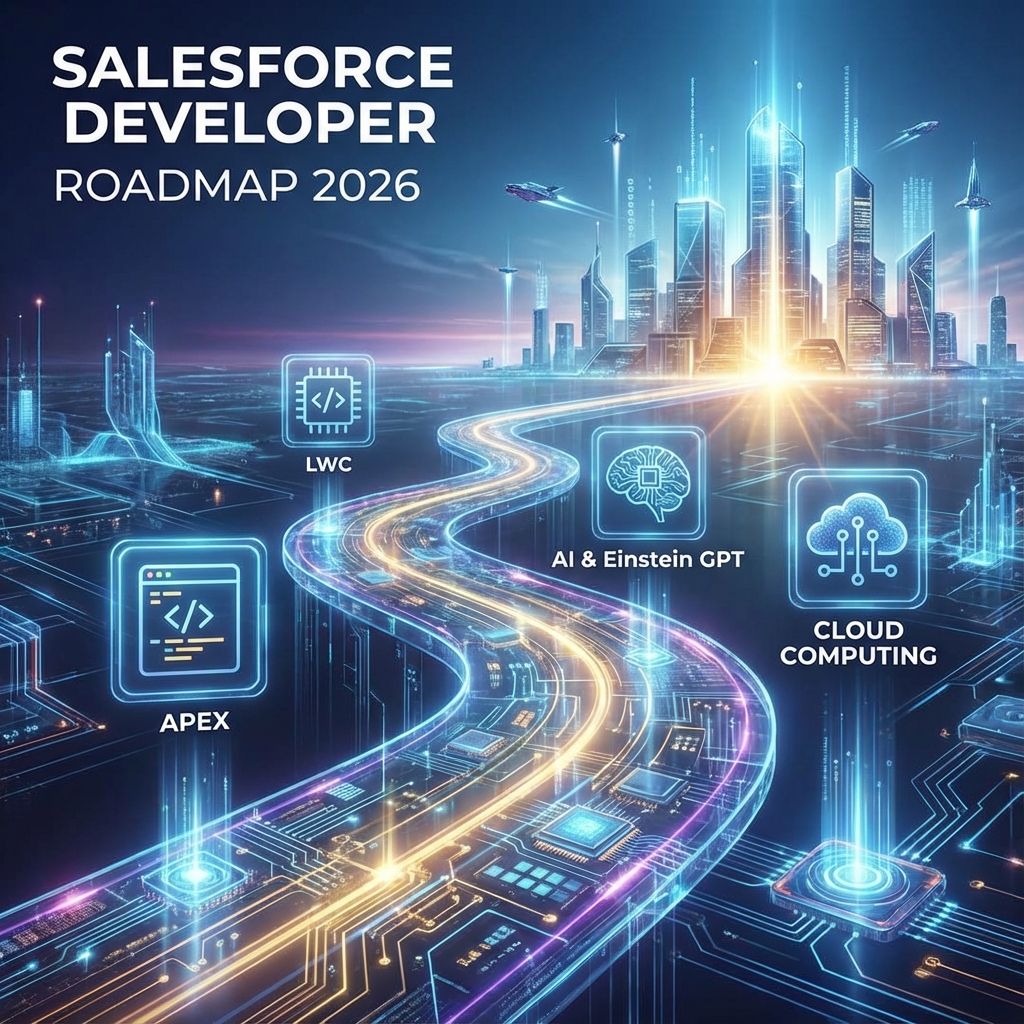
The year is 2026. The Salesforce ecosystem has evolved dramatically. It is no longer just about writing Apex triggers and creating Visualforce pages. Today, being a Salesforce Developer means being an architect of AI-driven solutions, a master of hyper-automation, and a guardian of data integrity in the Data Cloud.
If you are looking to break into this lucrative and exciting field today, the path looks different than it did just a few years ago. The bar has been raised, but the tools are more powerful than ever. Here is your essential roadmap to becoming a Salesforce Developer in 2026.
1. The Foundation: Don't Skip the Basics
It is a common mistake to jump straight into code. In Salesforce, "Clicks not Code" is still a golden rule. Before you write a single line of syntax, you must understand the platform's native capabilities.
- Admin Skills are Mandatory: You cannot effectively develop for a platform you don't understand. Knowing security (Profiles, Permission Sets), sharing rules, and standard object features is a prerequisite. Aim for the Salesforce Administrator Certification first.
- Data Modeling: This is your bread and butter. Understand Objects, Fields, and Relationships (Master-Detail vs. Lookup). If you get the data model wrong, no amount of code can save the project.
- Declarative Automation: Know when to use Flow. In 2026, Flow is incredibly powerful and handles 80% of the automation scenarios that used to require code. A good developer knows that the best code is often no code at all.
2. The Code: The Core of Development
Once you have the foundation, it's time to learn the languages that power the platform.
- Apex (Back-End): Salesforce's proprietary language is similar to Java. You need to master:
- SOQL & SOSL: How to query data efficiently.
- Triggers: Handling logic before or after records are saved.
- Asynchronous Apex: Using Queueable, Batch, and Future methods to handle large jobs without hitting governor limits.
- Lightning Web Components (Front-End): LWC is the standard for building user interfaces. It is built on modern web standards. You need strong skills in JavaScript (ES6+), HTML, and CSS.
- Event-Driven Architecture: Learn to use Platform Events to decouple your systems and build scalable, real-time integrations.
3. The New Standard: AI & Agentforce
This is the biggest shift in the roadmap. In 2026, AI proficiency is not "nice to have"—it is mandatory.
- Prompt Builder: You need to know how to create and test prompt templates that integrate Generative AI into daily workflows.
- Agentforce: We have moved beyond chatbots. You will be building autonomous agents that can reason and execute tasks. Understanding how to configure and extend these agents is a core developer skill.
- Einstein Copilot: Learn how to build custom actions that allow the AI assistant to interact with your custom Apex code and Flows.
4. The Tooling: Professional Workflow
Gone are the days of writing code in the Developer Console. You need a professional development environment.
- VS Code: This is the industry-standard IDE. Get comfortable with the Salesforce Extension Pack.
- Salesforce CLI: Command Line Interface mastery is non-negotiable for retrieving metadata, running tests, and deploying code.
- DevOps Center & Git: "Change Sets" are a relic of the past. You must understand version control (Git), branching strategies, and CI/CD pipelines managed through Salesforce DevOps Center.
Conclusion
The journey to becoming a Salesforce Developer in 2026 is challenging but incredibly rewarding. The demand for professionals who can bridge the gap between traditional software development and the new wave of AI agents is skyrocketing.
Start with Trailhead, build a portfolio of projects that showcase both your coding and AI skills, and get certified. The future is being built on this platform, and there is a seat open for you.